Activated Attachment Systems
One of the first steps we can take towards understanding ourselves, our relationships and gain insight into how we experience the world can be taken by identifying which primary attachment style we may have adopted to survive our childhood.
It’s then with support and/or through self exploration that we can open our eyes to the dynamics of how we relate to others – through observing our external and internal worlds.
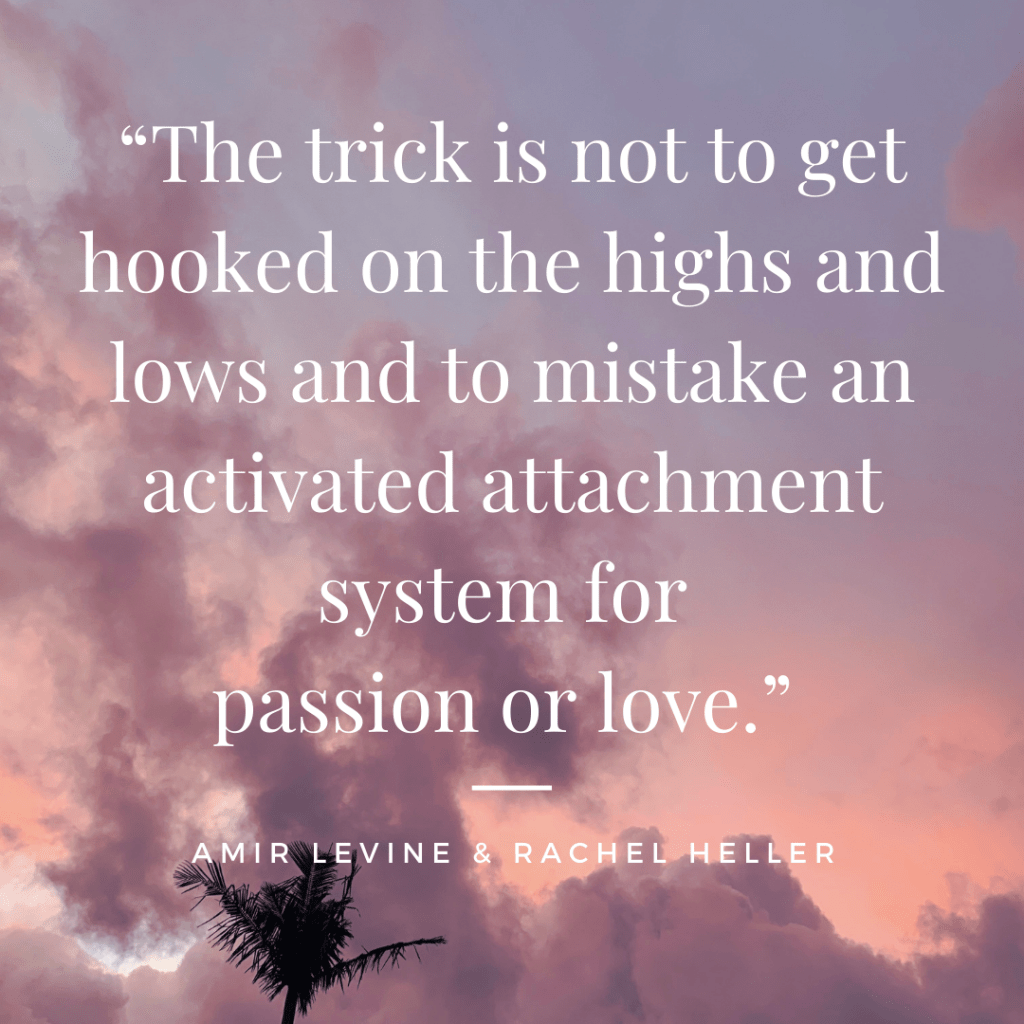
Often it is found that people with an anxious attachment style are attracted to the perceived self-assured, stoic, confidence and stability that can accompany the avoidant attachment style and the person with avoidant attachment can be attracted to the energised and giving nature that can be a part of the anxious attachment style.
The attraction between the two forms a cyclical push-pull feedback loop which activates our attachment systems and core wounds. The relationship likely has the dynamic of highs and lows, which can feel addictive and are more so a reflection of our unmet needs as infants.
The anxiously attached person craves the stoic and appearing stable connection with the avoidant attached person whilst simultaneously fearing it, as their caregivers were most likely inconsistent with their expression of love and unpredictable. This dynamic is ultimately recreated in the relationship.
The avoidant attachment style often means the person craves the other person to give a lot of ’emotional labour’ to sustain the relationship as they experience emotional intimacy as a loss of their independence whilst simultaneously fearing abandonment. Therefore the avoidant attached person affirms their initial beliefs that emotional intimacy appears as ‘neediness’ and eventually that they will be ‘abandoned’ if the anxiously attached person leaves the relationship and ultimately that they cannot depend on others to meet their needs.
Though this type of relationship can feel emotionally unfulfilling and painful at times, through conscious effort it can be transformative and teach us a lot about ourselves.
When we gain this insight, we can work with our partner, a professional and/or through self discovery ways to move towards a secure attachment style and healthy, sustainable relationships.

Further Resources
Attached – Dr Amir Levine & Rachel S.F. Heller
https://attachment.personaldevelopmentschool.com/











 Mika Bell Counselling